A Food Lover’s Journey Through Jamaican Food Classics
Jamaican food has a way of announcing itself before it reaches the table. You catch the smoke first, then the warm spice, then something sweet, sharp, and savory folding together in the air. Walk past a roadside jerk pan in Kingston, a family cookshop in St. Ann, or a market stall with bubbling soup on a Saturday morning, and you understand quickly that this cuisine does not whisper. It sings in full voice.
What makes Jamaican food so compelling is not only flavor, though flavor is the hook. It is the way history, geography, and daily life show up in each dish. African cooking traditions, Indigenous ingredients, European influence, Indian spices, Chinese migration, and local ingenuity all meet on the plate. The result is a cuisine that feels deeply rooted and remarkably varied. One meal can be fiery and smoky, another mellow and coconut-rich, another bright with citrus and thyme. The common thread is confidence. Jamaican cooks know when to push seasoning hard and when to let the main ingredient carry the dish.
For anyone approaching the classics for the first time, it helps to think less in terms of restaurant categories and more in terms of moments. There is breakfast Jamaican food, street Jamaican food, Sunday Jamaican food, beach Jamaican food, celebration Jamaican food. Some dishes are tied to memory as much as appetite. Others are prized because they stretch ingredients wisely without sacrificing pleasure. That balance, generous flavor with practical cooking, is one of the great strengths of the cuisine.
The pull of jerk, smoke, spice, and technique
No journey through Jamaican food can begin anywhere but jerk. It is the dish that travels best across borders in reputation, though not always in execution. Real jerk is not simply meat with heat. It is a cooking method, a spice profile, and a relationship with fire.
Traditional jerk centers on a seasoning built around allspice, known locally as pimento, and Scotch bonnet peppers. Thyme, scallion, garlic, ginger, and sometimes cinnamon or nutmeg play supporting roles. The balance matters. A good jerk marinade should smell green and woody before the heat kicks in. The allspice gives it warmth that almost suggests clove, but more resinous and earthy. Scotch bonnet brings fruit along with fire, which is one reason it tastes so different from sauces built on generic chili heat.
Then there is the cooking. True jerk gets its character from smoke and time. In Jamaica, jerk pork and jerk chicken are often cooked over pimento wood or coals, with meat laid over improvised grills, old oil drums, or dedicated pits. The surface chars, the fat renders, and the seasoning forms a crust that tastes both fierce and rounded. It is not a polished, dainty dish. It is rugged in the best possible way.
Jerk pork tends to be the richer, more revelatory experience if you enjoy fattier cuts. Shoulder and belly soak up spice beautifully, and the charred edges can be almost candy-like where seasoning and rendered fat meet. Jerk chicken is more widely available and easier for many cooks to master, but it can dry out if handled carelessly. The best versions keep the meat juicy under a dark, smoky skin that stains your fingers and makes napkins useless.
A common disappointment outside Jamaica is jerk that leans too heavily on sweetness or treats heat as the only goal. Bottled sauces often flatten the complexity. Good jerk should taste alive, not one-note. If the smoke is absent, if the allspice disappears, or if the pepper scorches without flavor, the spirit of the dish gets lost.
Rice and peas, the quiet foundation
Visitors often talk first about the headliners, but rice and peas is what teaches you how Jamaican meals are built. It appears beside jerk, curry, stew, escovitch, and more. It is not filler. It is structure.
Despite the name, the “peas” are usually kidney beans or gungo peas, depending on the season and region. The rice cooks with coconut milk, thyme, scallion, garlic, and often whole Scotch bonnet for fragrance rather than aggressive heat. The grains absorb seasoning while staying distinct. Done well, the result is aromatic and savory with gentle richness from the coconut.
The first time you eat properly made rice and peas with something sharp or spicy, the logic becomes obvious. It softens intensity without muting it. It catches sauce. It carries thyme and coconut into each bite without competing for attention. In a meal with jerk chicken, fried plantain, and a spoonful of slaw, rice and peas is the point of harmony.
This is one of the places where good Jamaican cooking shows restraint. The seasoning is present, but not loud. If jerk is the trumpet section, rice and peas is the bass line, steady, essential, and easy to underestimate until it is missing.
Ackee and saltfish, a national dish with texture and depth
Ackee and saltfish deserves careful attention because it is one of the most distinctive plates in the Caribbean. It also tends to challenge expectations. People who have never eaten ackee often ask what it tastes like. The more useful question is what it feels like. Properly cooked ackee is delicate, creamy, and soft, somewhat like scrambled egg in appearance, though not in flavor. It absorbs seasoning beautifully without becoming mushy.
The dish pairs ackee with salt cod that has been soaked and simmered to remove excess salt. Onions, tomatoes, scallion, thyme, garlic, and Scotch bonnet usually join the pan. The cod brings savor and structure. The ackee brings richness and a gentle, almost buttery quality. Together they create a breakfast dish that is substantial without being heavy.
It is easy to understand why this plate holds national significance. It captures so many elements of Jamaican cooking at once: adaptation, balance, and respect for ingredients that require skill. Saltfish came through trade and preservation. Ackee, brought from West Africa, found a home in Jamaican soil and identity. The dish itself rewards patience. If overworked, ackee breaks down. If underseasoned, the whole thing feels flat. When handled properly, it is nuanced and deeply satisfying.
Served with fried dumplings, roasted breadfruit, boiled green bananas, or yam, ackee and saltfish becomes an entire morning’s anchor. It is the kind of breakfast that changes your plans for the day because after eating it, a rushed schedule feels almost insulting.
Patties, the ideal handheld meal
If jerk is the smoke-scented legend and ackee the cultural touchstone, the Jamaican patty is the everyday genius. It solves a practical problem elegantly: how to make a portable meal that still tastes specific and memorable.
A good patty has a thin, flaky crust tinted golden with turmeric or curry powder, then a filling that is savory, moist, and assertively seasoned. Beef is the standard, but chicken, vegetable, shrimp, and even ackee versions are common. The filling should not be watery, and the pastry should shatter lightly rather than slump.
There is a particular pleasure in eating a patty when it is almost too hot to hold. Steam escapes, the crust leaves a trace of yellow on your fingers, and the first bite reminds you that compact food can still be serious cooking. In Jamaica, patties are not elevated snacks in search of a food trend. They are working food, school food, travel food, comfort food.
Much depends on where you buy them. A patty fresh from a busy bakery has a different life from one that has sat under a warmer too long. Pairing it with coco bread is common and smart. The soft bread cushions the pastry and turns the whole thing into something even more filling. It is not subtle, and it does not need to be.
Curries that tell another side of the island’s story
Jamaican curry carries the mark of Indian influence, but it has its own personality. The powder often features turmeric, coriander, cumin, fenugreek, and other spices, yet the final dishes usually feel brighter and less creamy than some South Asian curries people may know best. Thyme, Scotch bonnet, allspice, and scallion pull the flavors firmly into Jamaican territory.
Curried goat is one of the classics, especially at gatherings and celebrations. When cooked well, the meat is tender but not collapsing, and the sauce is thick enough to cling to rice without becoming gluey. Goat has a distinct flavor that rewards slow cooking and bold spice. It should taste rounded and deep, not gamey or muddy.
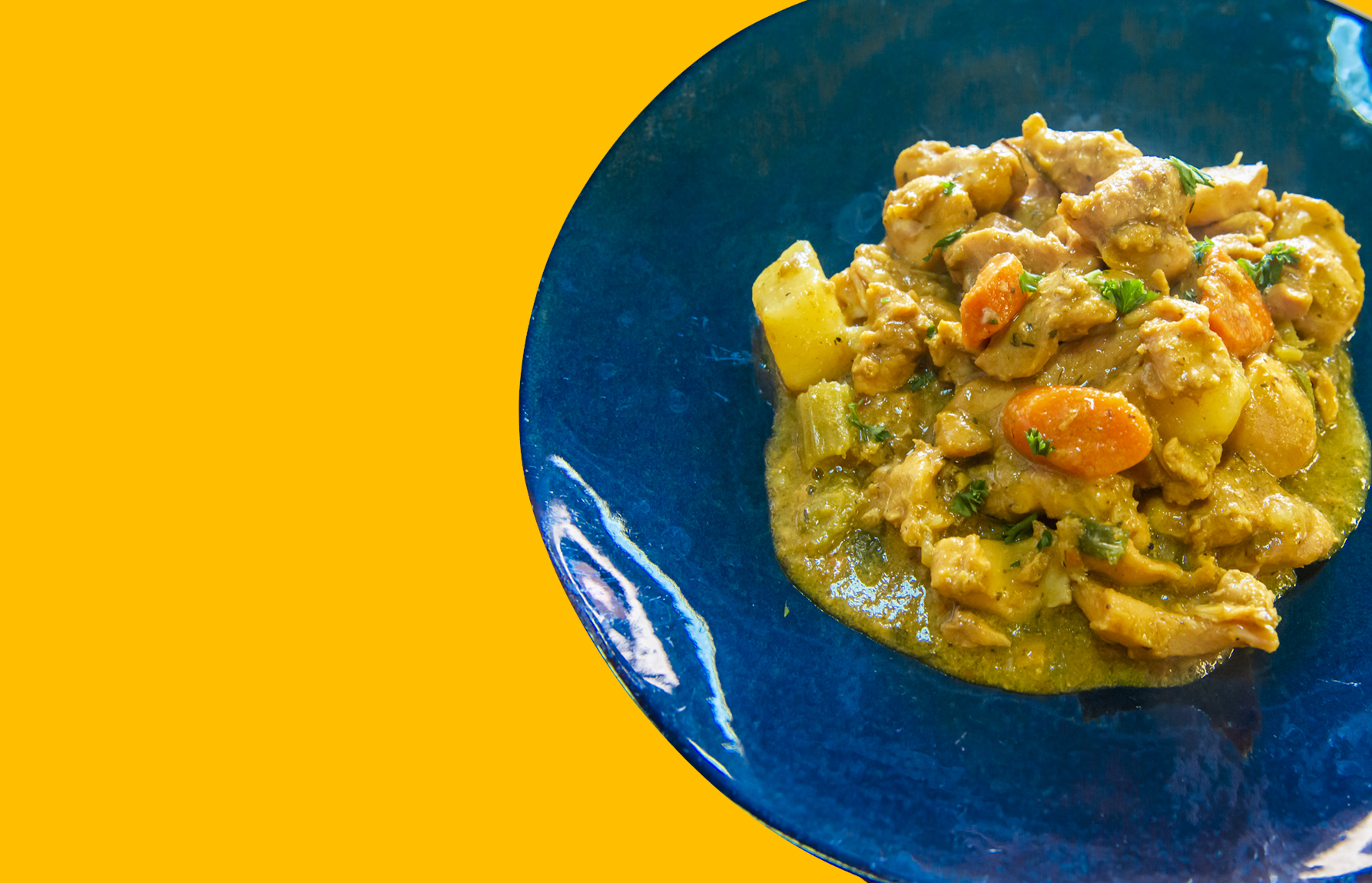
Curried chicken is more common for everyday meals and easier for many households to prepare. Potatoes often go into the pot, soaking up color and flavor while thickening the sauce slightly. The best versions hit a balance between spice and freshness. Too much curry powder and the dish turns dusty. Too little browning or sautéing at the start, and the sauce lacks depth.
Curried shrimp and curried vegetables show how flexible the style can be. Jamaican food is often associated with meat and fish, but vegetable cooking on the island is no afterthought. Cabbage, callaloo, pumpkin, and cho cho all appear with confidence and care in home kitchens.
Stew, browning, and the art of layered savory flavor
If jerk showcases fire, stewed dishes show another kind of mastery. Brown stew chicken is one of the great comfort foods of Jamaica, and its beauty lies in patient layering. The chicken is usually seasoned ahead of time, then browned to build flavor before simmering with onions, peppers, tomatoes, herbs, and gravy. Browning sauce gives the dish its dark color and slight bittersweet edge.
This is food with body. The gravy should be glossy and deeply seasoned, with enough acidity to keep it from feeling heavy. Carrots and potatoes may appear, depending on the cook, but the sauce remains the star. Spoon it over white rice or rice and peas and the meal takes care of itself.
Stew peas offers a different kind of comfort. Despite the name, this is a thick, hearty bean stew, often made with red peas, salted meat, fresh beef or pig’s tail, coconut milk, herbs, and small flour dumplings called spinners. On paper it sounds dense. In practice, when balanced well, it is lush and restorative rather than cumbersome. It is the sort of dish that seems designed for rain, fatigue, and the need to feel looked after.
Run down, usually made with mackerel simmered in coconut milk with tomato, onion, and herbs, is another classic that deserves more attention than it gets internationally. The name refers to the sauce cooking down. The fish softens and the coconut becomes savory and concentrated. It is humble food with enormous character.
Seafood by the coast, escovitch and festival
Near the water, Jamaican food shifts mood. You still find the same bold hand with seasoning, but there is often more brightness, more crunch, more immediacy. Escovitch fish is a perfect example. A whole fish, often snapper, is fried until crisp, then topped with a hot pickled dressing of vinegar, onions, carrots, Scotch bonnet, and allspice. The contrast is the point. Crisp skin meets sharp vegetables, hot flesh meets acidic bite.
At the beach, escovitch fish often arrives with festival, those lightly sweet fried dough fingers that somehow make complete sense beside spicy, vinegary fish. Festival softens the edges of the meal the way rice and peas might elsewhere, but with a different texture and a touch of sweetness. Bammy, a cassava flatbread with Indigenous roots, is another traditional companion, especially with fried fish. When toasted or fried properly, it is chewy at the center, crisp at the edges, and excellent for soaking up sauce.
These meals are often eaten outdoors, with paper napkins, plastic chairs, and a breeze that never quite overpowers the smell of hot oil and pepper. The setting matters. Some cuisines can be abstracted from place more easily than others. Jamaican coastal cooking loses something if it is treated as mere plating exercise. It wants sun, noise, and appetite.
Soups that are really meals
In many culinary traditions, soup is a light opening. In Jamaica, it is often the event itself. Saturday soup in particular has the weight of ritual. Families and regulars know which pot is on and when to show up.
Mannish water is perhaps the most famous to outsiders, a peppery goat soup associated with celebrations and, often, folklore about vitality. Whether one believes every claim made about it is beside the point. What matters is that it is aromatic, spicy, and tied to communal occasions.
Chicken foot soup, red pea soup, fish tea, and pumpkin soup all speak to a broader truth about Jamaican food: thrift and pleasure are not enemies. Bones, feet, root vegetables, peas, dumplings, and herbs come together into broths with astonishing depth. Fish tea in particular surprises people expecting something mild. It is usually clear, sharp, and invigorating, often loaded with scallion, thyme, garlic, and pepper. One cup can wake up the whole palate.
These soups also show how texture matters in Jamaican cooking. Soft yam, firm dumplings, slippery noodle-like pieces of vegetable, gelatin-rich cuts of meat, they create a kind of conversation in the bowl. It is one reason these dishes satisfy beyond their ingredient cost.
Sides that refuse to stay in the background
No serious appreciation of Jamaican food can ignore the supporting cast. Callaloo, steamed cabbage, fried plantain, roasted breadfruit, boiled green banana, yams, and dumplings all shape the meal.
Callaloo, often compared loosely to spinach though it is its own thing, is typically sautéed with onion, tomato, thyme, and pepper. It can be silky or slightly coarse depending on how it is cooked. It belongs happily at breakfast or dinner. Fried ripe plantain offers sweetness, but not the candy-like kind that poor versions deliver. It should caramelize at the edges and remain soft inside.
Breadfruit may be one of the most underappreciated starches in the wider conversation around Caribbean food. Roasted over open flame until the skin blackens, then peeled and cut, it is starchy, faintly nutty, and deeply satisfying with saltfish or rundown. Boiled dumplings, sometimes called spinners in soups or served as larger dumplings beside breakfast, bring chew and substance. They are not glamorous, but they are excellent at what they do.
This is where a meal becomes more than its main dish. The right side does not merely accompany. It adjusts the rhythm of eating, giving you something soft after something sharp, something bland enough to reset the palate, or something sweet enough to frame spice.
Sweet finishes and what to drink
Jamaican desserts and drinks deserve more space than they often receive. Rum cake, dense and fragrant, is a holiday anchor but welcome year-round. Sweet potato pudding, especially the style that is dark, spiced, and baked until the edges catch, can be one of the most memorable sweets on the island. It is less sugary than many expect, with warm spice and a texture somewhere between cake and custard.
Gizzada, with its pinched pastry shell and sweet coconut filling, speaks directly to the island’s affection for coconut in both savory and sweet forms. Toto, a humble coconut cake, rarely gets international glamour but often disappears fastest at the table.
To drink, sorrel around Christmas is almost non-negotiable, steeped with ginger and spices until tartness and warmth meet. Ginger beer, made properly, has a bite that deserves the name. Irish moss, peanut punch, and fresh juices add yet another layer to the food landscape. Even a simple cold bottle of soda beside a spicy patty has its own logic. Not every pairing needs to be refined to be right.
Eating Jamaican food well, what first-time diners should notice
For someone new to Jamaican food, the smartest approach is to pay attention to how components interact rather than hunting only for heat or famous names. Notice whether the rice carries coconut and thyme. Taste the difference between raw Scotch bonnet heat and pepper that has mellowed in a pot. Look at the char on jerk before you bite. Feel how a flaky patty crust breaks. The cuisine rewards observation.
It also rewards range. If you order only the obvious dish, you can miss the variety that makes the food culture rich. A plate of jerk chicken tells you one story. Ackee and saltfish tells another. Brown stew chicken and escovitch fish belong to the same national table but speak in different registers.
There is also value in seeking out places where the food turns over quickly. Busy jerk stands, bakeries with fresh patties, small cookshops with a short menu, these often give a truer picture than large menus trying to satisfy every possible craving. Jamaican food is at its best when it is cooked with confidence and served without fuss.
A final practical truth is that seasoning levels vary by cook, region, and audience. Some kitchens temper heat for visitors. Others do not. If you enjoy spice, ask for the real version. If you do not, say so clearly. But do not confuse lower heat with lower quality. Some of the most accomplished Jamaican dishes are memorable because of depth, not because they burn.
Jamaican food lasts in the mind because it is generous in every sense. Generous with spice, yes, but also with memory, labor, and identity. It carries the imprint of people who learned how to build flavor from what they had, then turned that necessity into art. A plate of jerk pork from a smoky roadside stand, a breakfast of ackee and saltfish, a hot patty eaten too quickly, a bowl of Saturday soup that feels like recovery itself, https://hectorambo054.vantagequill.com/posts/the-flavor-packed-world-of-jamaican-food each one offers more than a meal. Each one gives you a clearer sense of the island’s voice, bold, layered, and impossible to mistake.
Reggae Pot Jamaican Grill
2243 S Monaco St Pkwy #104
Denver, CO 80222
+1 720-410-2956
FAQ About jamaican food
What is the best Jamaican food to try in Denver?
The best choice depends on your tastes. Popular options include jerk chicken, curry goat, slow-cooked oxtail, and savory patties. Reggae Pot lists these dishes on its menu, with sides such as rice and peas and plantains. Ask the Denver team about current availability and spice levels.
Is Jamaican food very spicy in Denver?
Heat varies by dish and preparation. Jerk seasoning often includes scotch bonnet peppers alongside herbs and allspice, while other dishes may have gentler seasoning. Ask about the heat of the specific dish and any sauce before ordering.
What are some popular Jamaican snacks?
Jamaican patties are a popular snack made with flaky pastry and savory meat or vegetable fillings. Other options include fried dumplings and festival, a sweet fried dough often served with savory dishes. Availability varies, so check the current menu when ordering.